Launching the New Jersey Slavery Records Database

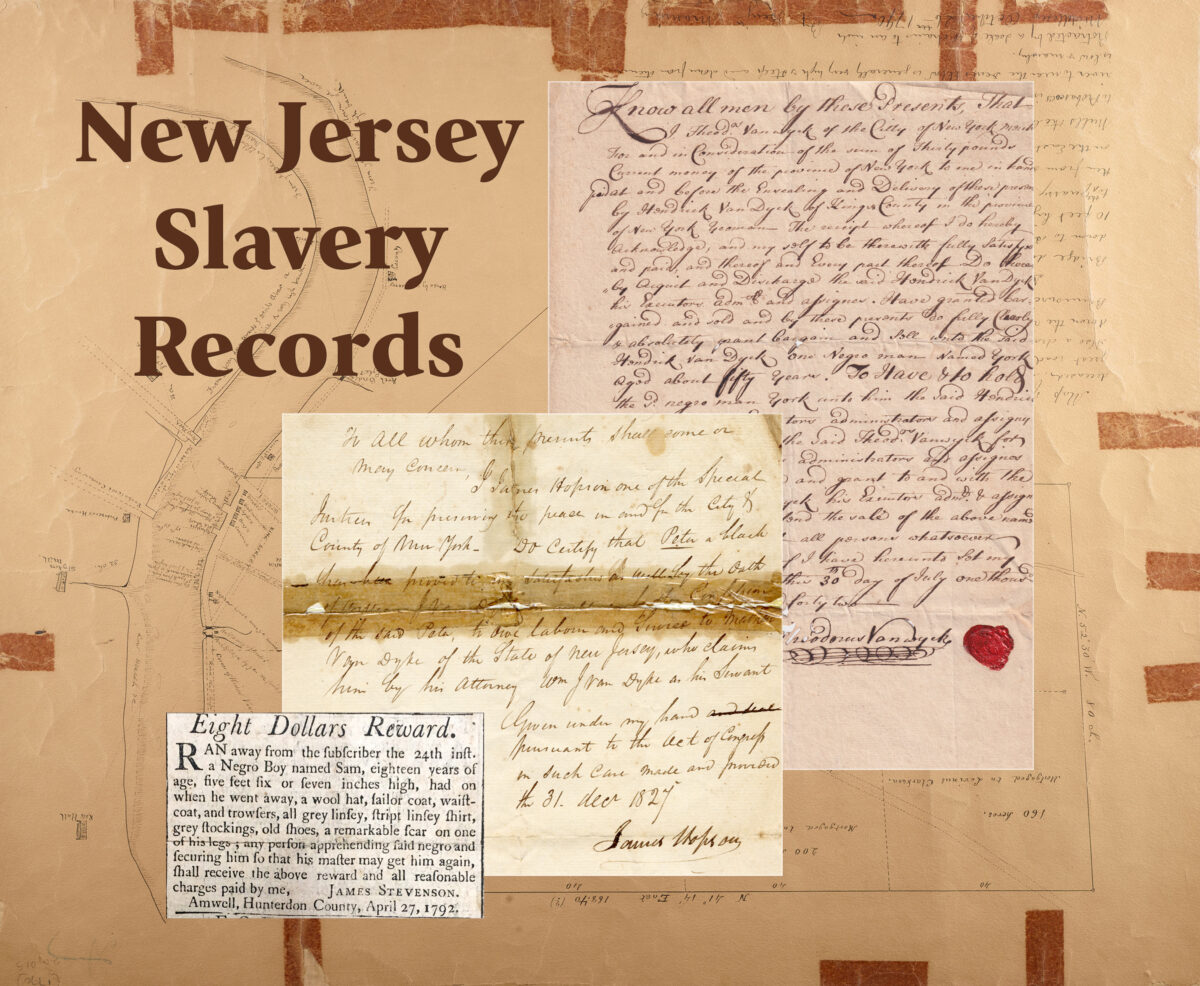
The Institute for the Study of Global Racial Justice is proud to announce the launch of the new database New Jersey Slavery Records. This website aims to document the history of slavery in our communities through digital archival sources and linked open data. This database was developed in collaboration with On These Grounds: Slavery and the University, a cross-institutional digital initiative funded by the Mellon Foundation.

The New Jersey Slavery Records project is led by Jesse Bayker, Digital Archivist at the Institute for the Study of Global Racial Justice. Our team includes Francesca Giannetti, Digital Humanities Librarian at Rutgers University–New Brunswick, and graduate assistants Lindsey Dixon, Isaac Guzmán, and Adam McNeil.

Rooted in Scarlet and Black, Volume 1

The New Jersey Slavery Records project builds on the work of Rutgers historians who took a deep dive into the historical connections between slavery and the university and wrote the book Scarlet and Black, Volume 1: Slavery and Dispossession in Rutgers History, edited by Deborah Gray White and Marisa Fuentes. The researchers went on to trace Rutgers Black history to the present in Volumes 2 and 3. Following the publication of the Scarlet and Black books, archival materials documenting African American history at Rutgers from slavery to the twentieth century have been compiled and published in the Scarlet and Black Digital Archive, curated by digital archivist Jesse Bayker.

In the course of this research, the Scarlet and Black team learned that Rutgers Special Collections and University Archives hold a treasure trove of documents that illuminate the history of slavery in Middlesex County beyond the walls of the university. These documents describe hundreds of events in the lives of enslaved people who lived in surrounding communities. Dr. Bayker began compiling a dataset of names and events related to these archival records.

From this original dataset, Dr. Bayker began developing a digital project to create a searchable database of slavery-era records that would reach beyond Rutgers. From 2021 to 2024, Dr. Bayker worked on developing the New Jersey Slavery Records dabatase while serving as the digital archivist at the Institute for the Study of Global Racial Justice at Rutgers University–New Brunswick.

Partnership with On These Grounds

During the formative stage of development, our partnership with On These Grounds: Slavery and the University shaped the intellectual trajectory of the New Jersey Slavery Records project. Funded by the Mellon Foundation, On These Grounds is a cross-institutional initiative to create, evaluate, and disseminate a Linked Open Data ontology focused on adequately describing the lived experiences of those enslaved individuals who labored in bondage at higher education institutions and who are represented in those institutions’ archival holdings. On These Grounds is led by Dr. Sharon Leon with core partners at Michigan State University, Georgetown University, and the University of Virginia.

Since the summer of 2021, Dr. Bayker led a team of Rutgers collaborators who engaged in an intensive year-long process of testing the alpha version of the data model created by On These Grounds. In addition to MSU, Georgetown, and UVA, we worked with testing partners at Washington and Lee University, University of Georgia, University of North Carolina at Chapel Hill, and Hampden-Sydney College to apply the linked open data ontology to our archival holdings, test data creation workflows, and provide feedback on revisions to the model.

Today, as we gather with our On These Grounds partners at the fall 2022 Universities Studying Slavery Conference, we launch the New Jersey Slavery Records website, which uses the platform and data model that we tested over the past year.
New collection: Alice Jennings Archibald History Library Records

The Scarlet and Black Project is excited to announce the publication of a new digital collection: Alice Jennings Archibald History Library Records (Mount Zion AME Church of New Brunswick).

This collection consists of photographs, manuscripts, church histories, and financial records from the Alice Jennings Archibald History Library at the Mount Zion African Methodist Episcopal Church of New Brunswick. Founded in 1827, Mount Zion AME is the oldest African American institution in Middlesex County, New Jersey. The Scarlet and Black Project has partnered with Mount Zion AME to digitize select archival materials and make them available as part of our digital archive.

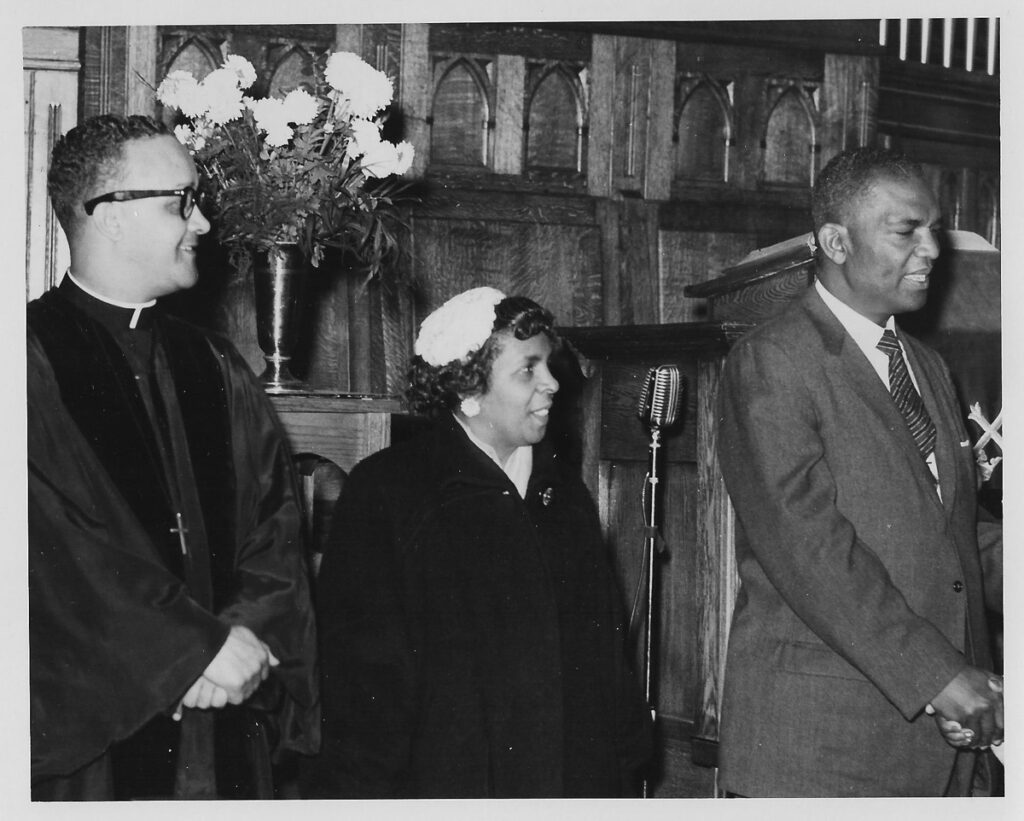
Rev. James W. Waters, Alice Jennings Archibald, and Rev. H. Solomon Hill

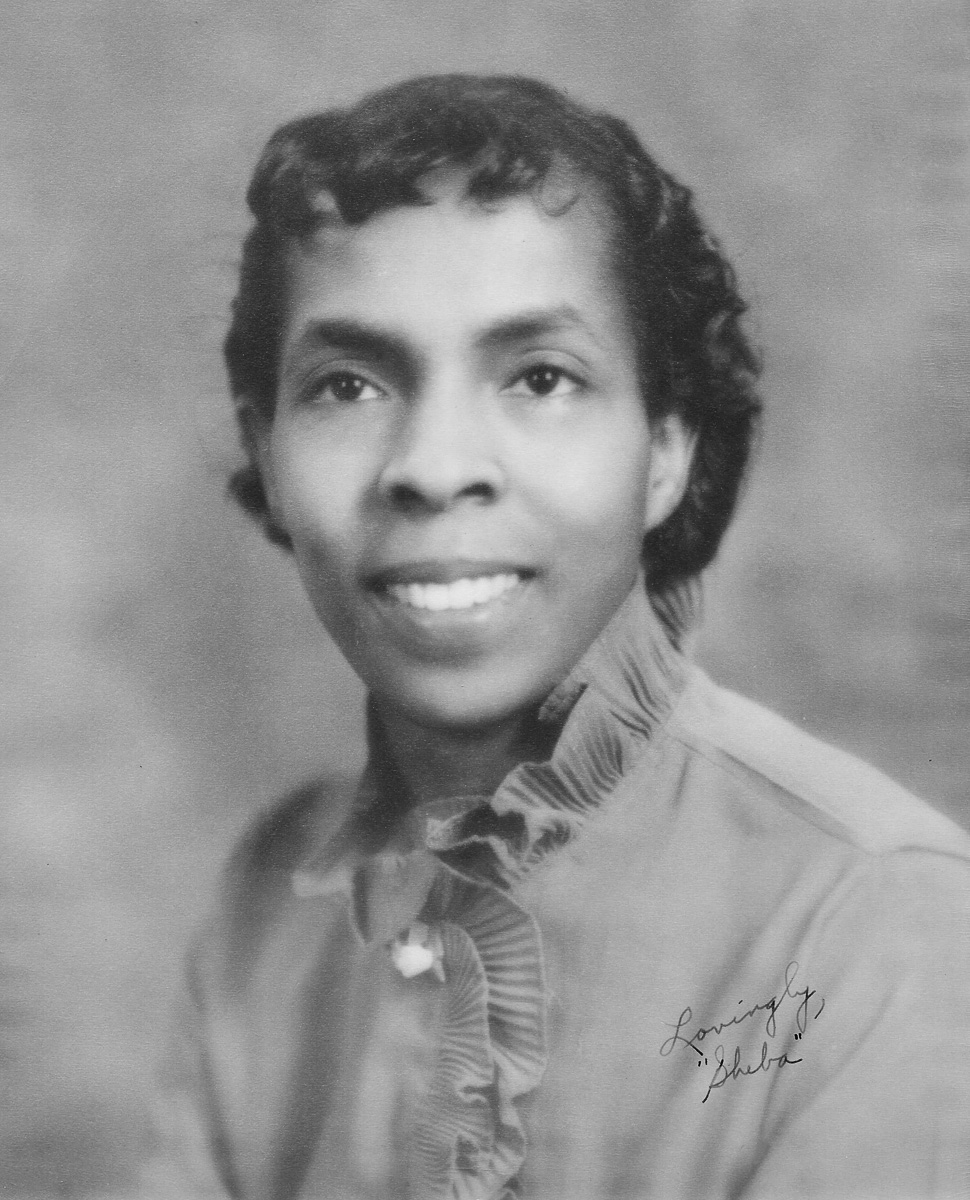
The Alice Jennings Archibald History Library is dedicated to the memory of church historian Alice Jennings Archibald (1906-2002). For many decades, Mrs. Archibald led the efforts to collect and preserve archival materials documenting African American life in New Brunswick. She was instrumental in founding the history library at Mount Zion AME.

Alice Jennings Archibald was an educator and a civic leader. A life-long New Brunswick resident, Mrs. Archibald was also a Rutgers alumna. She was the first African American woman to receive a graduate degree from Rutgers. She earned a master’s degree from the Rutgers School of Education in 1938. In those days, Rutgers College only admitted men for undergraduate study, while women attended the New Jersey College for Women (later called Douglass College). But the graduate program at the new Rutgers School of Education was coeducational.

New exhibit: Rutgers African American Alumni Gallery

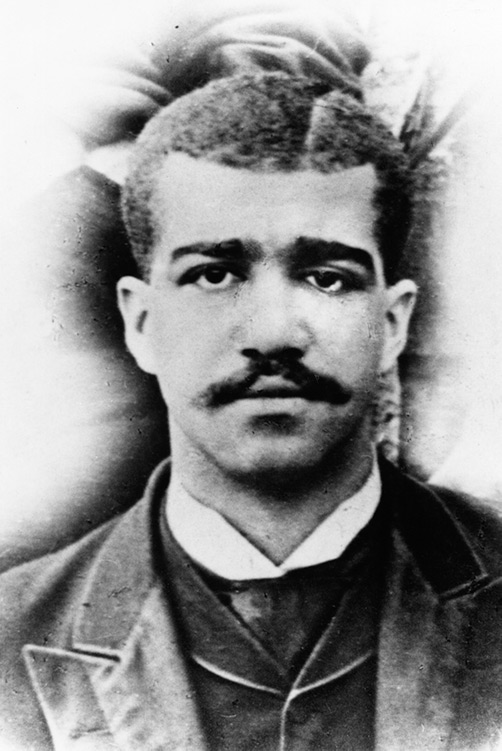
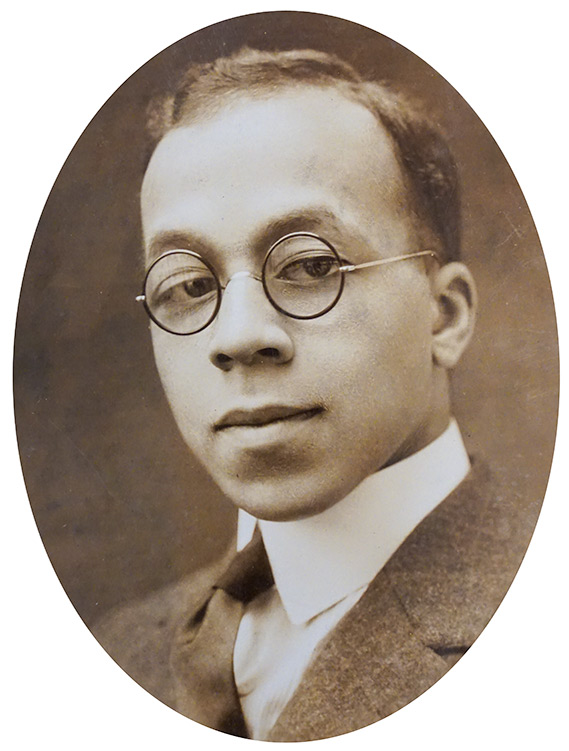
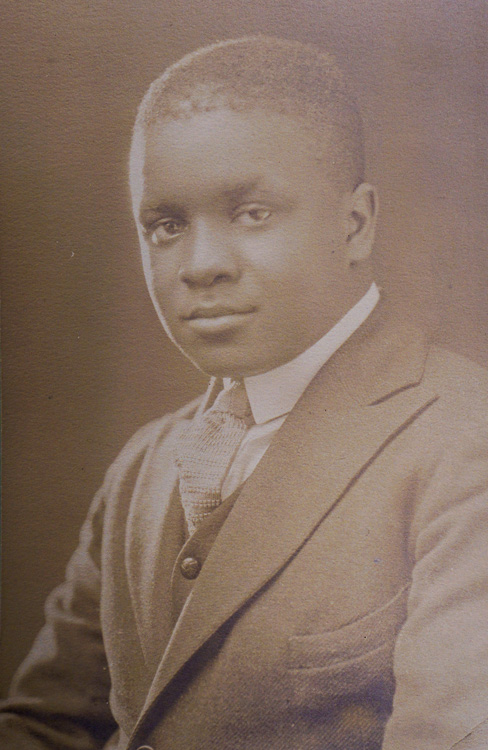
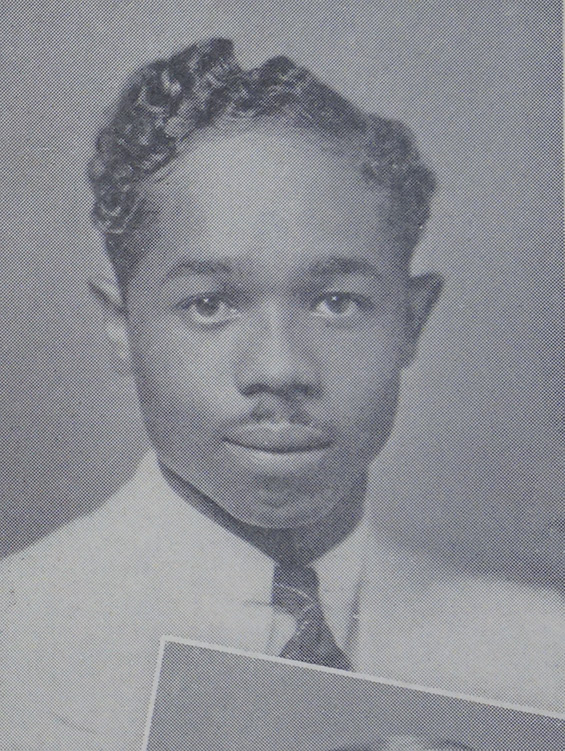
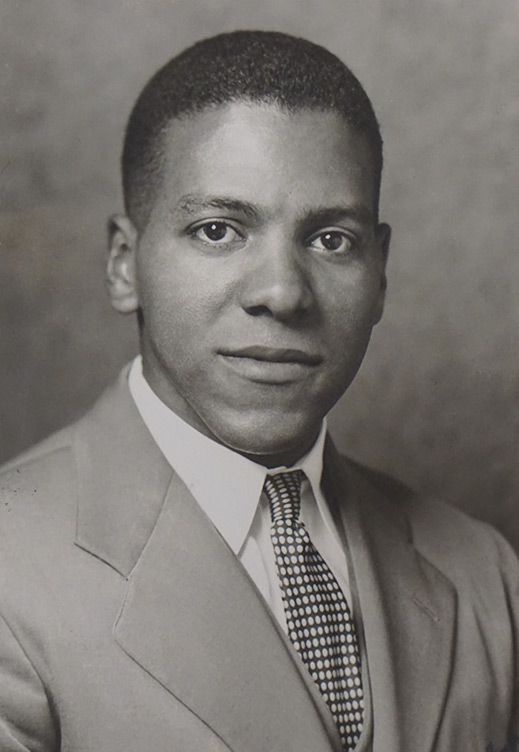
We are thrilled to present our new digital exhibit Rutgers African American Alumni Gallery: The Forerunner Generation, by Beatrice J. Adams and Jesse Bayker. This exhibit brings together photographs and brief biographical sketches of all twenty-five African American men who attended Rutgers University before the end of World War II.

The research into their stories began with the chapter “The Rutgers Race Man: Early Black Students at Rutgers College” by Beatrice J. Adams, Shaun Armstead, Shari Cunningham, and Tracey Johnson, in our book Scarlet and Black, Volume 2: Constructing Race and Gender at Rutgers, 1865-1945, where seven of these men are profiled in more detail. They were “the forerunner generation,” entering an exclusive white men’s school in Jim Crow America before the movement for Civil Rights and desegregation reshaped the university into a more diverse and accessible institution. Paul Robeson, who graduated in 1919 and whose legacy we have celebrated with centennial commemorations in 2019, is the most famous of these early alumni. In the epilogue to the book, Deborah Gray White calls on us to “recover, acknowledge, and celebrate all of the forerunners of desegregation at Rutgers.” The Rutgers African American Alumni Gallery exhibit seeks to answer that call.

If they were daunted by their exceptionalism or exclusion, they did not and could not show it. Rather they competed fiercely, completed their degrees, and many went on to leadership positions in the race and nation.

— Deborah Gray White in Scarlet and Black, Volume 2, “Epilogue: The Forerunner Generation”

This exhibit draws on archival materials from our digital collections Scarlet Letter Yearbooks (1908–1943) and Rutgers Alumni (before 1945).

Collection: Slavery Era Newspaper Clippings

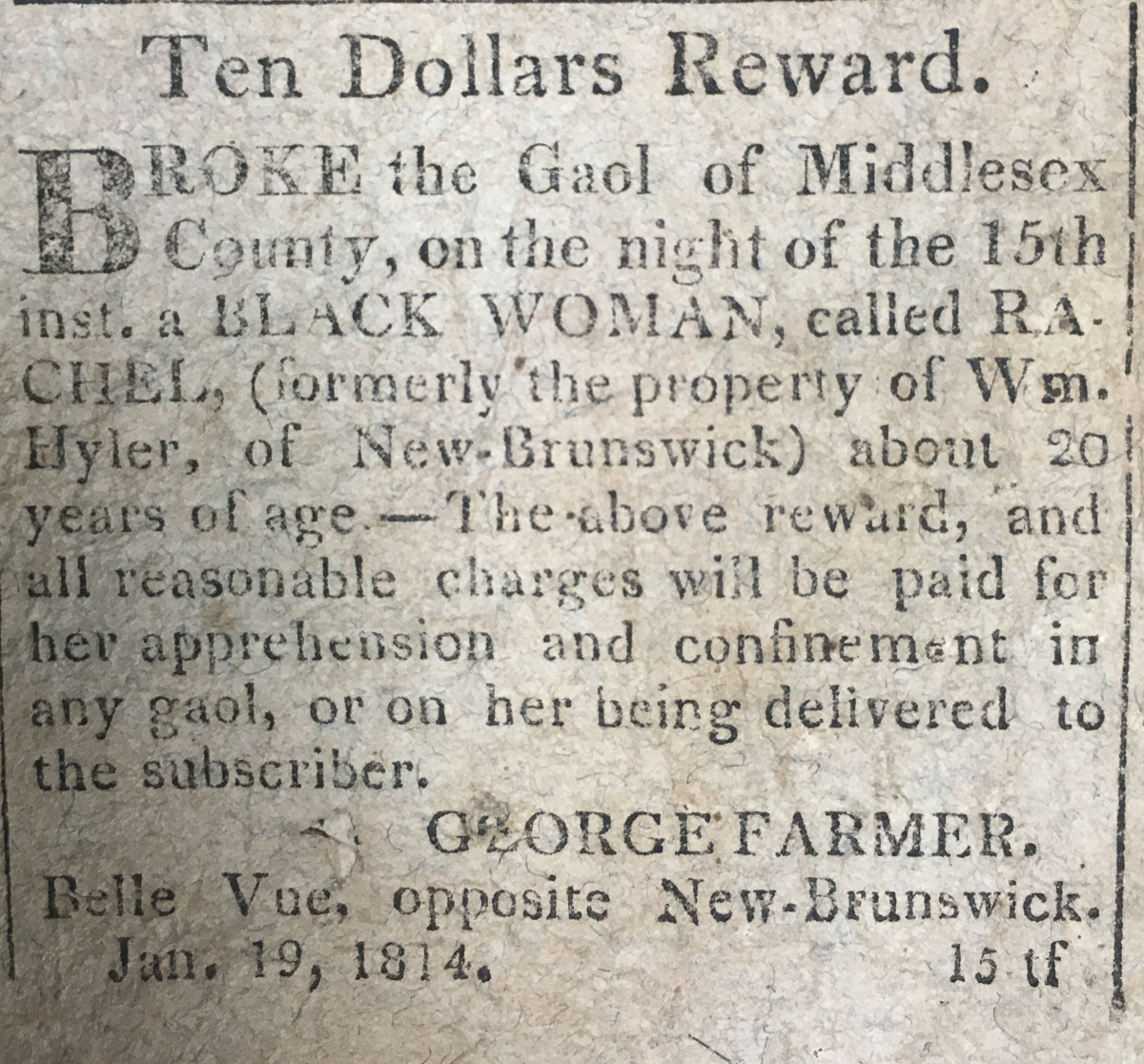
We are excited to announce a new collection: Slavery Era Newspaper Clippings. This collection consists of New Jersey newspaper clippings from the late eighteenth and early nineteenth century, including runaway ads, slave sale ads, and articles that highlight the activities of Rutgers trustees.

Many (though not all) of these newspaper clippings mention a location, such as the residence of the slaveowner who offered a reward for a runaway’s capture. Whenever possible, the primary location associated with the newspaper clipping has been pinned to a map. Occasionally the location mentioned is precise, such as the Middlesex County jail, which historical records indicate was located in New Brunswick on Prince (now Bayard) Street between George Street and Queen (now Neilson) Street. More often, the newspaper mentions only the city, village, or county where the person involved resided. For this reason, the geolocation pins on the map are approximate, typically pointing to a central location in the city or village mentioned.

New exhibit: Campus Namesakes

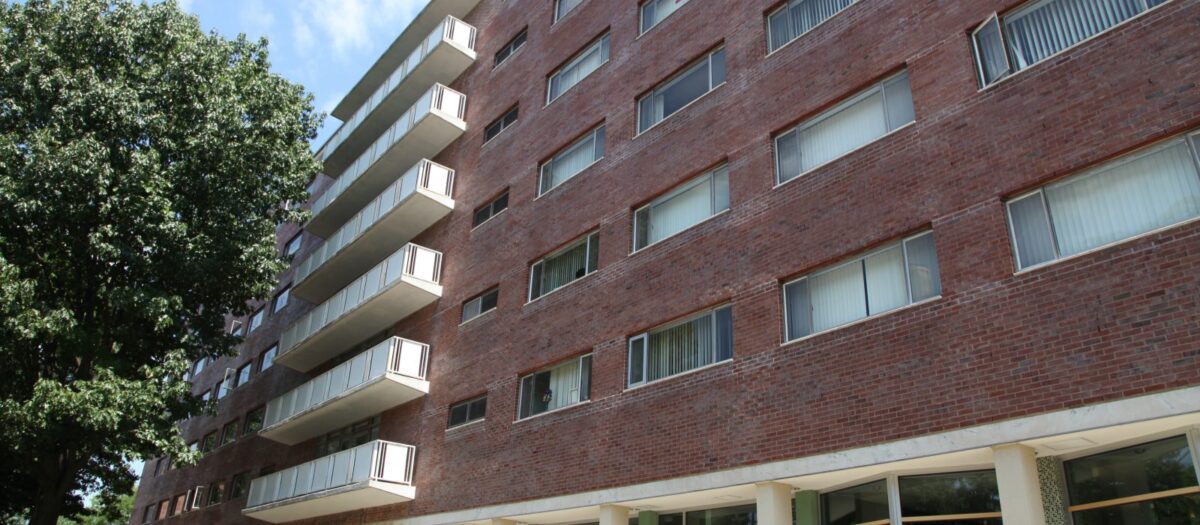
A group of undergraduate students in Jesse Bayker’s Digital History course collaborated to create Campus Namesakes, a new digital exhibit for the Scarlet and Black Project. This exhibit features the founders and benefactors of Rutgers University whose names are emblazoned on campus buildings—such as Frelinghuysen, Rutgers, Hardenbergh, Livingston, and Neilson—and explores their relationship to slavery. The exhibit also highlights the recently dedicated landmarks of Sojourner Truth Apartments and Will’s Way.

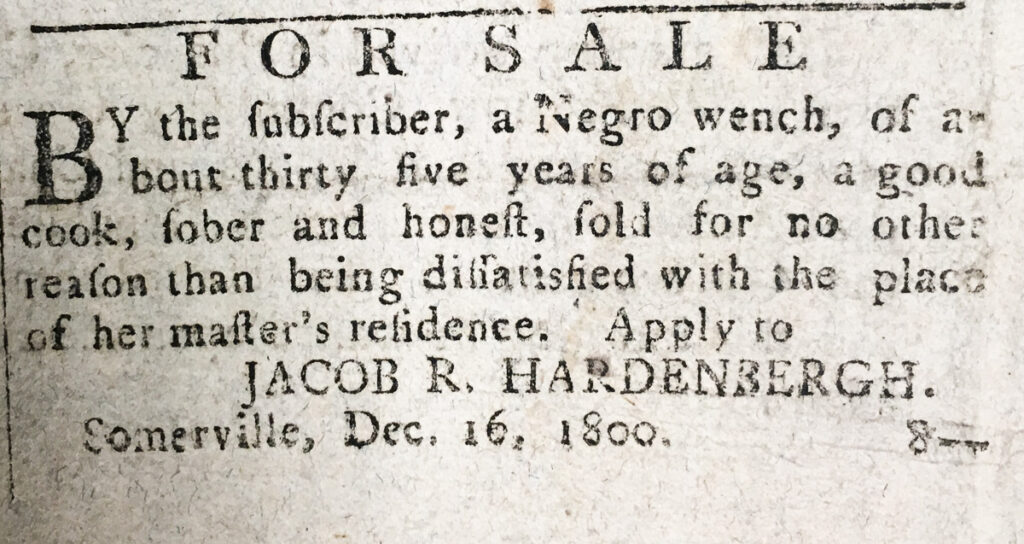
Jacob R. Hardenbergh Jr. slave sale ad
Jacob R. Hardenbergh Jr. advertised the sale of a black woman in 1800

As students of Rutgers, we feel that people deserve to know the true history of the names they see every day on campus.

— Student contributors Jenny Schneider, Courtney Stevenson, Rachel Diroll-Zack, Dante Intindola, Khaled Reza, Sid Mehta, and Manan Shah